The Cost of the Scoreboard
by Gemma Mindell
Robert pushed the power button on the television remote, cutting off a commentator mid-shout. The room fell into a quiet state, though the residue of the broadcast seemed to vibrate in the air. He was seventy years old, and for the first time in his life, the primary language of his neighbors felt foreign. Everything was framed as a battle. Every headline was a scoreboard.
He walked to the window and looked out at the street. Three houses down, a new flag flew—one he didn’t recognize, representing a specific faction of a specific movement. Across the street, another neighbor had posted a sign that used aggressive language to describe anyone who didn’t share their exact perspective. Robert felt a tightening in his chest. It wasn’t the fear of disagreement; it was the exhaustion of the division.
His phone buzzed on the side table. It was a text from Jim, a friend he had known for forty years. They used to talk about fishing and local high school football. Now, Jim’s messages were almost exclusively links to inflammatory articles and demands for Robert to “take a side.”
“You can’t stay on the fence forever, Bob,” the latest message read. “If you aren’t with us, you’re helping them win. Pick a team.”
Robert didn’t reply. He set the phone face down. The idea of “winning” had become a national obsession that he found repulsive. He didn’t want to win against his fellow citizens; he wanted to live alongside them.
Martha entered the room, carrying two mugs. She handed one to him and sat in her usual chair. She saw the look on his face—the one that had become more frequent over the last few months.
“Jim again?” she asked.
“Jim, the news, the internet,” Robert said, sitting down. “It’s a constant pressure. They want me to wear a color. They want me to declare a loyalty to a tribe I don’t belong to. I told Jim last week that I’m interested in the country’s well-being, not the party’s victory. He looked at me like I was speaking a dead language.”
Martha took a sip of her drink. “People are scared, Robert. Fear makes people grab onto the nearest group for safety.”
“It’s more than fear,” Robert replied. “It’s a cultural anomaly. I’ve seen disagreements before. I’ve lived through decades of different administrations. But this is different. It’s like everyone has decided that half the country is an existential threat. They’ve forgotten the most basic premise we were raised on: United we stand, divided we fall. It’s not just a catchy phrase from a history book. It’s a functional requirement for a republic.”
He leaned forward, his hands wrapped around the warm mug. “I’m still an American, Martha. I haven’t changed. But I feel like a man standing in the middle of a bridge while people on both ends are trying to saw it in half. They think if the bridge collapses, only the people on the other side will fall. They don’t realize we’re all on the same structure.”
“What did you tell Jim?”
“I told him I’m waiting,” Robert said. “I’m waiting for this fever to break. I know there are people who are completely adverse to any kind of change. They want to freeze time, even if the world is moving on. And then there are others who want to change everything on a whim, chasing every new idea like it’s a shiny object, without considering what they’re breaking in the process.”
He looked at Martha, trying to find the right way to describe what he saw in his head.
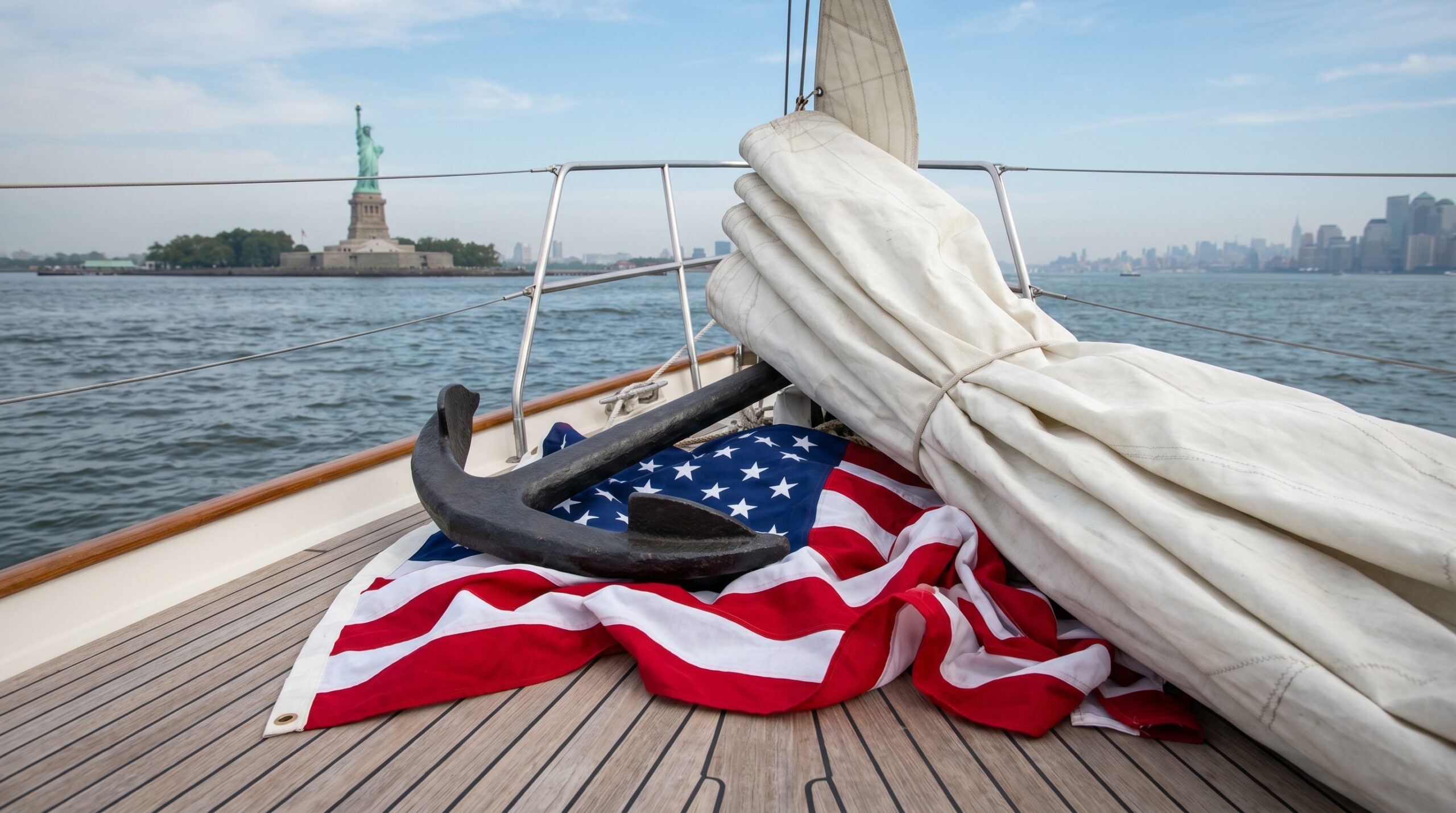
“Think of a boat,” he said. “Some people act like an anchor. They want to stay exactly where they are, terrified that any movement will lead to disaster. They dig in. Then you have the people who act like a sail. They want to catch every gust of wind, desperate to move as fast as possible, regardless of the direction or the rocks ahead. They spend all their time screaming at each other. The sail hates the anchor for holding it back. The anchor hates the sail for trying to drag it along.”
He paused, staring at the steam rising from his mug. “What they both fail to realize is that they are part of the same boat. A sail without an anchor is a ship at the mercy of the storm, likely to be smashed against the coast. An anchor without a sail is just a heavy object sinking in the mud. You need both to navigate. You need the stability of the anchor and the momentum of the sail. But instead of working together to steer the vessel, they are trying to rip the boat apart to prove who is more important.”
Martha nodded slowly. “And you? Which part are you?”
“I’m just trying to keep the hull together,” Robert said. “I refuse to be just the anchor or just the sail. I want to be the person who remembers that we have a destination that requires both. I’m tired of the rhetoric that says I have to hate the sail to be a good anchor, or that I have to cut the anchor loose to be a good sail. It’s a false choice.”
He stood up and walked back to the window. The sun was lower in the sky, casting long shadows across the street. He saw Greg, the neighbor from three houses down, walking his dog. Greg was wearing a hat with a political slogan. Robert wondered if he could even have a conversation with Greg about the weather without it turning into a debate about the soul of the nation.
“I’m distraught by the number of people who just want to ‘win,'” Robert continued, his voice low. “If you win by destroying the person across the street, what have you actually gained? You’ve gained a neighborhood of enemies. You’ve gained a country that can’t function. That’s not a victory. That’s a slow-motion collapse.”
“Do you think it will end?” Martha asked.
“Everything ends,” Robert said. “Cycles move. This is an anomaly—a period where we’ve allowed ourselves to be convinced that our differences are greater than our shared interests. We’ve allowed media outlets and social platforms to monetize our anger. But eventually, the cost of the division becomes too high. People get tired of the adrenaline. They get tired of being angry at their cousins and their friends over things they can’t control.”
He turned back to her, a small, tired smile on his face. “I’m seventy. I don’t have time to join a tribe. I’ve seen enough to know that the tribes come and go, but the country is what remains if we’re careful with it. I’m going to keep being a diverse American who cares about the whole boat. If that makes me an outcast in Jim’s eyes, then I’ll be an outcast.”
Robert went to his desk and opened a drawer. He pulled out a small, framed photograph from thirty years ago. It was a picture of a neighborhood block party. Jim was there, laughing. Greg’s father was there. People of different backgrounds, different jobs, and certainly different politics were all standing around a grill. No one was carrying a sign. No one was demanding a loyalty oath. They were just neighbors.
He set the photo on top of the desk.
“I’m staying right here,” Robert said. “I’m not moving to one side or the other. I’m staying in the center of the boat, holding onto the rails, and waiting for the rest of them to realize that we’re all headed to the same place. We either get there together, or we don’t get there at all.”
Martha stood up and walked over to him, placing a hand on his shoulder. “It’s a lonely place to be right now.”
“Maybe,” Robert said. “But it’s the only place that feels like home.”
He looked at his phone one last time. He didn’t delete Jim’s message, but he didn’t reply to it either. Instead, he opened his contact list and looked at the names of the people he had known for decades. He hoped that, eventually, they would find their way back to the boat. Until then, he would watch the horizon and keep his own counsel, a citizen of a country he still believed in, even if it currently felt like it was trying to forget itself.