
The Biological Imperative of Healthspan: A Comprehensive 2025–2026 Analysis of Longevity Factors, Genetic Variants, and Geroscience Therapeutics
Introduction: The Epistemological and Clinical Shift from Lifespan to Healthspan
Over the past two centuries, unprecedented advancements in public health, sanitation, and medical interventions have dramatically extended the chronological human lifespan. The average global life expectancy, which stood at a mere 32 years in 1900, surpassed 73 years by the end of 2023.1 However, the modern demographic reality reveals a growing and highly problematic divergence between lifespan—the absolute number of chronological years lived—and healthspan, defined as the duration of life spent in optimal health, free from chronic, age-related diseases, and functional decline.1 As global populations age at an accelerating rate, the societal, economic, and individual burdens of managing a prolonged period of multimorbidity—characterized by cardiovascular disease, neurodegeneration, metabolic disorders, osteoarthritis, and systemic frailty—have catalyzed a fundamental reorientation in the field of geroscience.2
The primary clinical objective of modern medicine has officially transitioned from merely delaying mortality to compressing morbidity and preserving physiological resilience into advanced age.4 This transition represents a profound conceptual evolution. Aging is no longer viewed by the scientific and medical communities as an inevitable, uniform chronological progression. Instead, it is increasingly understood as a highly malleable biological process driven by distinct, targetable molecular mechanisms and hallmarks.6 By targeting the underlying biology of aging rather than addressing individual diseases sequentially as they arise, researchers aim to extend the period of vitality and independence.2 The AARP Geroscience Principles, released in 2025, and the 2026 GESDA Science Breakthrough Radar explicitly emphasize this shift, warning of a global governance crisis if the growing gap between lifespan and healthspan is not addressed through equitable, biomarker-driven longevity interventions.1
Over the course of the 2025–2026 research cycle, the scientific community has witnessed unprecedented breakthroughs in defining and manipulating these biological mechanisms. Through the convergence of large-scale intergenerational genomic analyses, sophisticated in vivo physiological models, and advanced, placebo-controlled clinical trials, researchers have isolated specific genetic variants, metabolic pathways, and pharmacological interventions that dictate the pace of biological aging.7 This exhaustive report synthesizes the most significant biological factors leading to longer, healthier lives, strictly focusing on data, clinical trials, and genetic mechanisms elucidated within the last year. It provides an in-depth analysis of the genetic drivers of familial longevity discovered by the Leiden Longevity Study, explores the exact molecular pathogenesis of age-related inflammation identified at the Max Planck Institute for the Biology of Ageing, and critically evaluates the statistical validity and peer acceptance of the latest pharmacological geroscience trials attempting to translate these biological insights into human healthspan extension.
The Genomic Architecture of Exceptional Longevity: Methodological Triumphs of the Leiden Longevity Study
While epidemiological and observational studies have long recognized that exceptional longevity and healthspan tend to cluster within specific families, the precise genomic architecture conferring this multigenerational survival advantage has historically remained elusive.9 Previous genetic research primarily focused on conducting genome-wide association studies (GWAS) on individual centenarians.9 However, the statistical validity of studying isolated individuals is frequently compromised by a multitude of confounding variables. Individual lifespan is heavily dictated by socio-economic status, dietary habits, behavioral variables, and cumulative environmental exposures.9 Consequently, an individual from a family with an average life expectancy might live exceptionally long due to optimal environmental conditions, while an individual possessing genuine longevity-promoting genetic variants might die prematurely due to environmental hazards or trauma.11
To overcome this profound methodological limitation, researchers associated with the Leiden Longevity Study (LLS) adopted a rigorous intergenerational, family-based analytical approach.9 Led by Professor Eline Slagboom and researcher Pasquale Putter at the Leiden University Medical Center in The Netherlands, the LLS focused on analyzing middle-aged adults who had long-lived parents.11 Earlier research by this group demonstrated that these specific individuals experienced a delayed onset of cardiometabolic disease by an average of 13 years compared to their partners whose parents had shorter lifespans.11 This highly statistically significant phenotypic divergence made it unequivocally clear that a longer healthspan was actively being passed down to subsequent generations, providing a pristine genetic reservoir for analysis.11
Sib-Pair Linkage Analysis and the Isolation of Rare Protein-Altering Variants
The 2025–2026 publication of the Leiden Longevity Study findings represents a masterclass in statistical genetics and functional genomics. To isolate the exact genetic drivers, the research team performed an affected sib-pair linkage analysis on the whole-genome sequences of 212 groups of long-lived sibships (offspring sharing the exact same two parents).9 This highly concentrated cohort, exceptionally enriched for ancestral longevity, allowed for a high-fidelity scan of the human genome.
The statistical validity of the linkage analysis was robust. The researchers successfully identified four novel genomic regions exhibiting maximum Logarithm of the Odds (LOD) scores of 3.0 or greater (LODmax 3.0), including a highly significant locus at 1q21.13 In the realm of genetic linkage analysis, a LOD score of 3.0 or higher is widely accepted by the peer community as the standard threshold for declaring statistical significance, indicating that the odds of these specific genomic regions being linked to the longevity trait are 1,000 times greater than the odds of them occurring by mere chance.13

By successfully restricting their analytical focus to these four highly validated genomic regions, the Leiden research team was able to dramatically narrow the pool of potential candidate longevity genes from the approximately 20,000 protein-coding genes in the human genome down to a highly manageable 350 genes.9 Subsequent to this localization, the team employed a stringent collapsing filtering strategy designed to uncover rare mutations.15 This additional layer of rigorous analysis revealed 12 rare, high-impact, protein-altering genetic variants situated within those regions that are strongly hypothesized to contribute to longer, healthier lives.9
The rarity of these mutations is of paramount importance to their functional significance. Unlike common genetic variants, which are widespread in the general population and typically offer only minimal, incremental protective effects, these newly discovered rare variants appear to act as potent, high-magnitude drivers of systemic physiological resilience.11 Because they were explicitly identified in multigenerational long-lived families, these variants provide a direct molecular explanation for the delayed onset of age-related multimorbidity and the lifelong survival advantage observed in these cohorts.13
The CGAS Gene Variant (rs200818241) and the Attenuation of Cellular Senescence
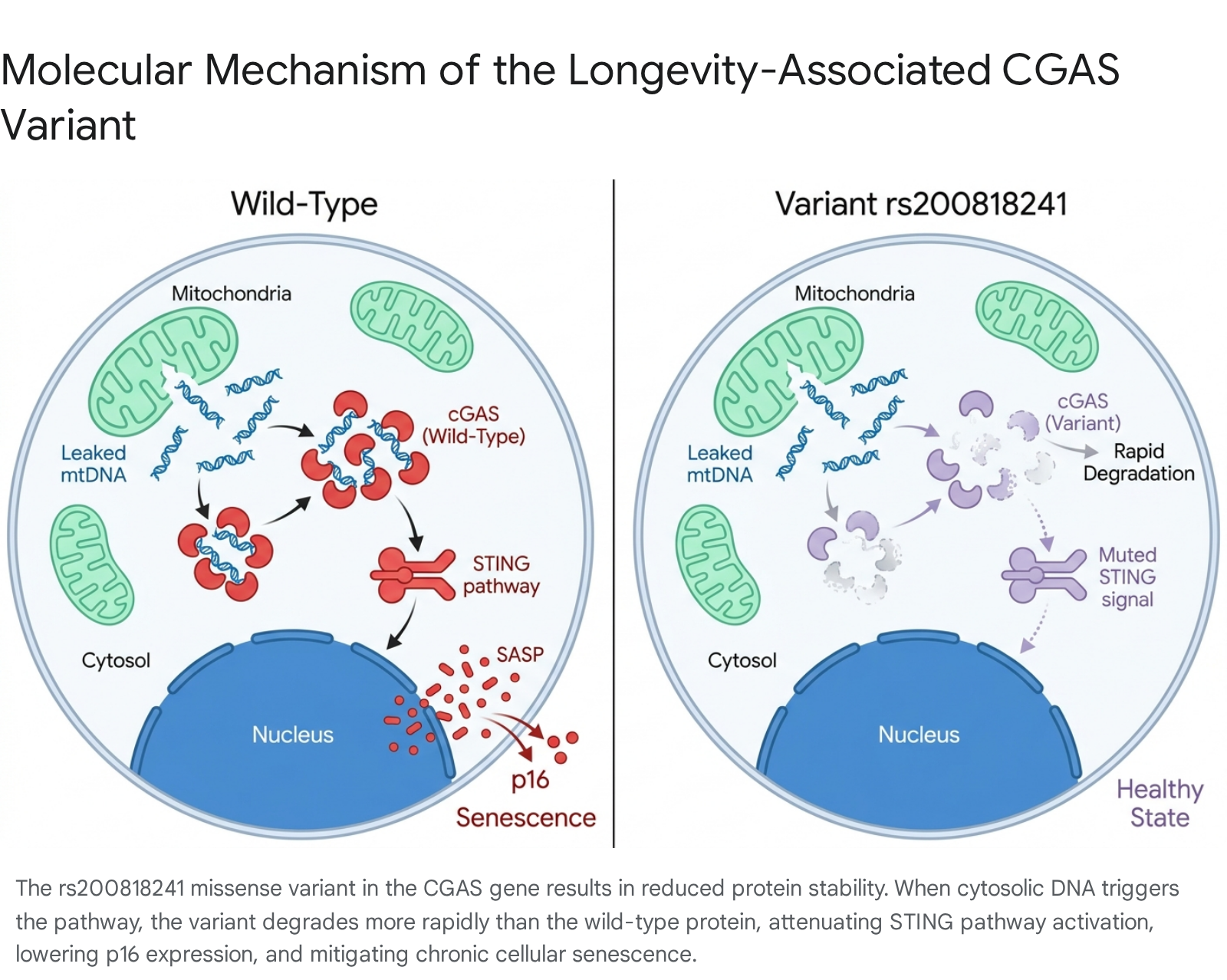
Among the 12 rare, protein-altering variants isolated by the Leiden Longevity Study, the most biologically profound and clinically intriguing discovery mapped to the CGAS (cyclic GMP-AMP synthase) gene.11 Specifically, a rare missense variant designated as rs200818241 was identified and found to be shared across two independent long-lived families contributing to the genomic linkage.13
The wild-type cGAS protein functions as a critical cytosolic DNA sensor and represents a foundational component of the mammalian innate immune system. Its primary biological directive is to detect and bind to double-stranded DNA located within the cytosol (the fluid inside the cell but outside the nucleus and mitochondria).9 Under healthy physiological conditions, DNA should be strictly confined to the nucleus or mitochondria; its presence in the cytosol is an alarming biological anomaly indicating either a viral infection or severe cellular damage.9 Upon detecting cytosolic DNA, the cGAS protein initiates the canonical cGAS-STING (Stimulator of Interferon Genes) signaling pathway, triggering a massive, cascading inflammatory response designed to neutralize pathogens and clear irreparably damaged cells.9
Protein Stability Assays and the Mechanics of Inflammatory Dampening
To understand exactly how the rs200818241 missense variant alters this critical immune pathway and contributes to extended healthspan, the Leiden researchers performed exhaustive in vitro functional impact analyses utilizing both human- and mouse-based cell models.16 To directly assess the impact of the variant on the structural integrity and lifecycle of the protein, the team utilized a cycloheximide (CHX) chase assay.14 Cycloheximide is an inhibitor of protein biosynthesis; by treating cells with this compound, researchers can halt the production of new proteins and observe the natural degradation rate of the existing proteins over time.14
The data derived from the CHX chase assay were highly definitive. Following CHX treatment, the cGAS-rs200818241 mutant protein degraded significantly more rapidly than the wild-type (WT) cGAS protein.14 This accelerated degradation means that less of the cGAS sensor accumulates in the cellular environment.17 Consequently, this reduced protein stability leads directly to an attenuated, or dampened, activation of the canonical cGAS-STING signaling pathway in response to cytosolic DNA.14
The physiological consequences of this attenuated signaling are profound. The dampening effect reduces the expression of key inflammatory markers, such as IFI44 and CXCL8.14 More importantly, it directly mitigates the onset of cellular senescence—a state of permanent cell cycle arrest characterized by the secretion of pro-inflammatory factors.14 The in vitro experiments demonstrated that cells expressing the cGAS-rs200818241 variant exhibited a significantly extended replicative lifespan compared to cells expressing the wild-type protein.14 This extended cellular lifespan was accompanied by a marked reduction in the expression of p16, a universally recognized primary biomarker of cellular senescence.14 Furthermore, quantitative analysis revealed a significantly reduced proportion of senescence-associated beta-galactosidase (SA--gal) positive cells in the variant cohort.14

Interestingly, the attenuation of the cGAS-STING pathway exhibited a remarkable degree of cell-type specificity. The dampening effects were prominently observed in granulosa cells (KGN) and primary human astrocytes, whereas the effect was only partial in standard human fibroblasts, indicating that the genetic protection may be particularly targeted toward specific organ systems and neuro-supportive tissues.14
The researchers hypothesized that members of these exceptionally long-lived families likely carried only one active copy of the wild-type CGAS gene, balanced by the presence of the rapidly degrading variant.11 This delicate genetic equilibrium provides a "quieter" baseline immune state.17 Sustained over a lifetime, this muted response protects the organism against the chronic, low-grade inflammation that drives age-related cellular decline, while still retaining sufficient immune capacity to clear acute infections and facilitate necessary tissue repair.11 The peer acceptance of these findings has been overwhelmingly positive, as it elegantly bridges the gap between functional genomics and the observable mitigation of systemic inflammaging.13
Mitochondrial Dysregulation, Nucleotide Imbalance, and the Pathogenesis of Inflammaging
To fully grasp the magnitude of the CGAS variant discovery made by the Leiden Longevity Study, it is imperative to understand exactly why the cGAS-STING pathway becomes spontaneously hyperactive during the normal aging process, leading to the highly destructive physiological phenomenon known as "inflammaging." Inflammaging refers to a chronic, sterile, low-grade inflammation that occurs systemically in the absence of any active viral or bacterial infection, and it is widely considered by the medical consensus to be a primary driver of tissue damage and age-related disease.17 In a landmark study published in the journal Nature in September 2025, a team of scientists from the Max Planck Institute for the Biology of Ageing, led by Professor Thomas Langer, successfully elucidated the exact pathomechanism underlying this process.18
The foundational premise of the Max Planck study rests on the intricate dynamics of mitochondrial nucleotide metabolism. Mitochondria, the energy-producing organelles of the cell, possess their own distinct circular genome (mtDNA) and require a continuous, uninterrupted supply of highly specific building blocks to accurately replicate this DNA.18 These proper building blocks are known as deoxyribonucleoside triphosphates (dNTPs).18 Conversely, ribonucleoside triphosphates (rNTPs) are slightly different molecules utilized exclusively for the synthesis of RNA.18
The researchers discovered that as mammalian tissues age, a severe metabolic disturbance invariably occurs within the cellular environment: the available pool of dNTPs becomes remarkably scarce relative to the abundance of rNTPs.18 Faced with this growing imbalance, the aging mitochondria make critical errors during the replication process. Lacking the necessary dNTPs, the mitochondrial replication machinery mistakenly incorporates the incorrect RNA building blocks (rNTPs) directly into the mitochondrial DNA sequence.18
Genomic Fragility and Cytosolic Leakage
The consequences of this misincorporation are biologically devastating. The embedded rNTPs (or rNMPs, once incorporated) render the normally robust mitochondrial genome highly fragile and unstable.18 Because the DNA structure is inherently flawed, subsequent replication attempts frequently fail and abort prematurely, creating a high volume of fragmented, broken pieces of mtDNA.18 As the mitochondria struggle with numerous unsuccessful replication attempts, the limited pool of correct dNTPs inside the organelle becomes even further depleted, elevating the rNTP:dNTP ratio in a vicious feedback loop that slows de novo mtDNA synthesis and causes increasingly severe copying errors.18
Eventually, due to the excessive breaks and structural failures, these fragmented pieces of mtDNA leak out of the mitochondria and accumulate in the cell's cytoplasm (cytosol).18 It is at this precise moment that evolutionary biology intersects with modern geroscience. Mitochondria are evolutionary descendants of ancient bacteria that were engulfed by ancestral cells billions of years ago.18 Because of this microbial origin, mitochondrial DNA closely resembles bacterial DNA.18 When the leaked, fragmented mtDNA enters the cytosol, the cell's defense systems—specifically the cGAS sensor proteins—cannot distinguish it from an actual bacterial pathogen.18 This tragic case of mistaken identity triggers the cGAS-STING pathway, driving the cell into a senescent state characterized by the continuous secretion of tissue-damaging inflammatory cytokines (the Senescence-Associated Secretory Phenotype, or SASP).18
Validating the Pathomechanism: From Knockout Models to Senotherapeutics
The statistical validity and causal certainty of this pathomechanism were rigorously proven through multiple complementary, genetically engineered mouse and human cell models.18
Initially, the research team utilized mice lacking the MGME1 gene, which encodes an exonuclease enzyme critical for proper mtDNA replication and repair.18 Without MGME1, these mice naturally experienced massive mtDNA leakage, triggering systemic inflammation that led to rapid kidney disease and premature mortality.18 Crucially, when the scientists systematically knocked out the STING component of the inflammatory pathway in these same mice, the inflammation was drastically reduced, and the kidney pathology significantly improved, unequivocally linking the mtDNA leakage to the STING response.18
Furthermore, the team demonstrated that active replication is required for this inflammatory cascade. When active mtDNA replication was intentionally slowed or blocked, the inflammatory response decreased, proving that the inflammaging stems directly from active breaks during the faulty copying process, rather than from ambient, pre-existing damaged DNA.18 The researchers then manipulated the nucleotide supply directly. By knocking down SAMHD1, an enzyme that actively depletes dNTPs, the researchers were able to restore the proper dNTP pool, halt the misincorporation of rNTPs, and completely suppress the activation of the innate immune response.18 Similar protective effects were observed in cell models lacking the mitochondrial protease YME1L, which also perturbs nucleotide metabolism.18
Finally, the study successfully translated these findings to human biology. Senescent human fibroblasts naturally exhibit a high rNTP:dNTP ratio due to the decreased activity of ribonucleotide reductase (RNR), the enzyme responsible for converting rNTPs to dNTPs.18 When the researchers lowered this ratio by directly adding exogenous deoxyribonucleosides (dNs) to the cell culture, it significantly reduced the accumulation of cytosolic mtDNA.18 This intervention exerted a powerful "senomorphic" effect—it rendered the senescent cells far less toxic by drastically reducing their pro-inflammatory SASP output, without requiring the outright destruction of the cells themselves.18
The peer acceptance of this study has been universally enthusiastic. Prominent figures in the field, including Harvard geroscientist Dr. David Sinclair, publicly endorsed the findings, citing the research as a definitive explanation for why sterile inflammation rises relentlessly as mammals age.18 The identification of this nucleotide imbalance provides an entirely new therapeutic avenue for geroscience, suggesting that restoring metabolic equilibrium within the mitochondria could preemptively halt the cGAS-STING cascade before it begins.
Bridging the In Vitro and In Vivo Divide: The Killifish Accelerated Aging Model
The monumental discoveries of 2025—the identification of the protective CGAS variant (rs200818241) by the Leiden Longevity Study, and the elucidation of the mitochondrial origin of inflammaging by the Max Planck Institute—provided a complete, mechanistic picture of how biological aging operates at the cellular level. Recognizing the profound synergy between these two breakthroughs, an international collaborative effort has mobilized to move these concepts out of isolated in vitro cell cultures and into living, complex organismal models.11
The transition to in vivo studies is a critical and necessary step. The researchers heavily caution that the health effects of the cGAS-STING pathway depend entirely on biological context.11 Complete pharmacological suppression or ablation of the cGAS pathway would leave an organism highly vulnerable to viral infections and the unchecked proliferation of cancer cells, while chronic over-activation drives the severe tissue damage associated with aging.11 Because of this delicate evolutionary balance, precise genetic modeling in a whole organism is required before any human medical applications can be safely considered.12
To execute this, researchers at the Max Planck Institute for the Biology of Ageing in Cologne, Germany, are currently undertaking sophisticated in vivo experiments scheduled throughout 2026.9 The team is utilizing advanced CRISPR-Cas9 gene-editing technologies to introduce the human rs200818241 missense mutation directly into the genome of the African turquoise killifish (Nothobranchius furzeri).9
The selection of the killifish as the primary animal model is highly deliberate and methodologically optimal for geroscience research. As the shortest-lived vertebrate that can be successfully bred in captivity, the killifish possesses a natural, highly compressed lifespan ranging from merely three to nine months.9 This accelerated aging biology allows researchers to rapidly track the entire lifespan and healthspan trajectories of the genetically modified fish in real-time.9 By comparing the mutant cohort against wild-type control groups, the scientists will be able to definitively ascertain whether the attenuated cGAS response successfully shields the whole organism from the toxic, downstream effects of age-related mtDNA leakage, and whether it fundamentally alters tissue pathology, disease susceptibility, and absolute longevity across multiple organ systems.11
The Genetic Heterogeneity of Diet-Induced Longevity: Disrupting the Caloric Restriction Paradigm
While advanced genetic manipulations and pharmacological interventions dominate modern scientific headlines, simple dietary interventions—specifically caloric restriction (CR) and intermittent fasting (IF)—have remained the most consistently documented and heavily relied-upon methods for extending lifespan and improving metabolic health in laboratory settings for nearly a century.22 However, a landmark, paradigm-shifting study authored by Gary Churchill and colleagues at The Jackson Laboratory (JAX), published in the journal Genetics in May 2026, has fundamentally disrupted the monolithic understanding of how dietary restriction affects mammalian longevity.22
Historically, aging research has relied almost exclusively on single-strain, highly inbred animal models (such as the C57BL/6 mouse).22 This reliance yielded generalized, universally applied conclusions regarding the benefits of fasting that, unfortunately, often failed to translate to highly heterogeneous, genetically diverse human populations.22 To rigorously evaluate the statistical validity and universal applicability of IF across varied genetic backgrounds, the Jackson Laboratory executed an incredibly expansive study utilizing a massive cohort of 800 mice from the Collaborative Cross (CC)—representing 10 distinct recombinant inbred strains.22 Furthermore, they compared these CC mice to a parallel cohort of Diversity Outbred (DO) mice, which possess extreme genetic heterogeneity specifically engineered to mimic the genetic diversity of the human population.22
The experimental design ensured rigorous metabolic tracking. All mice were maintained on an ad libitum (AL) standard chow diet until 6 months of age, at which point they were randomized into two lifetime groups: a continuous AL diet with unlimited food access, or a stringent Intermittent Fasting (IF) regimen consisting of a 48-hour fasting window every week.22
Statistical Outcomes, Sexual Dimorphism, and Interstrain Variation
The statistical outcomes of the study, measured comprehensively via Restricted Mean Survival Time (RMST) analysis and Kaplan-Meier survival curves, revealed staggering interstrain variation and profound sexual dimorphism that challenge decades of accepted aging biology.22
When the survival data from the inbred CC strains were aggregated, a highly significant sex-specific response to the fasting intervention emerged.22 Male mice subjected to the 2-day IF regimen achieved a modest but statistically significant extension in median survival compared to their AL-fed male counterparts. The median lifespan difference was 1.7 months, and the RMST analysis confirmed a survival advantage of 2.02 months ().22 Conversely, and highly surprisingly, female inbred mice demonstrated absolutely no significant survival benefit from the exact same dietary restriction protocol, showing an RMST difference of merely 0.33 months () between the fasted and control groups.22 Furthermore, across both sexes, neither group showed evidence of a substantial extension in maximum lifespan (estimated at the 90th percentile), indicating that while IF may compress morbidity in some males, it does not stretch the absolute biological limits of the species.22


However, when the researchers analyzed the Diversity Outbred (DO) cohort, they observed a distinctly different biological reality that highlighted the dangers of relying on inbred models. Outbred DO mice exhibited significantly longer overall survival times than the corresponding inbred CC mice under both control and IF diets, suggesting a general biological fitness cost associated with the inbreeding process itself.22 More importantly, while the 2-day IF had no effect on the lifespan of inbred female CC mice, it significantly and robustly increased the lifespan of the outbred female DO mice (), entirely contradicting the failure seen in their inbred counterparts.22

The study also exposed vast baseline longevity variations based purely on genetics, completely independent of diet. Under standard AL feeding, median lifespans ranged dramatically from a mere 14.1 months in the CC006/TauUncJ strain to an impressive 26.8 months in the CC003/UncJ strain.22 Even under the IF diet, the variance remained extreme, ranging from 16.9 months to 28.7 months depending on the specific genetic strain.22
The peer acceptance of this landmark JAX study solidifies a critical new doctrine in geroscience: physiological, metabolic, hematologic, and immunologic responses to fasting are intrinsically and heavily dictated by unique combinations of genetic background and biological sex.22 The data irrevocably proves that single-strain animal studies cannot be viewed as statistically valid predictors for widespread human dietary recommendations. Moving forward into 2026 and beyond, precision nutrition—guided by an individual's specific genetic architecture and sex—is an absolute requirement for translating metabolic interventions into reliable, measurable human healthspan extension.22
Pharmacological Geroscience (Part 1): mTOR Inhibition and the PEARL Trial
While the elucidation of rare genetic variants and metabolic pathways provides the theoretical foundation for longevity, the transition of these concepts into tangible human clinical reality relies heavily on rigorous, placebo-controlled pharmacological trials. The 2025–2026 period witnessed several paradigm-shifting milestones in this arena, utilizing repurposed, FDA-approved therapeutics specifically targeted at the core biological hallmarks of aging.4
Rapamycin, an FDA-approved macrolide compound historically utilized as a potent immunosuppressant in organ transplantation and oncology, has long been recognized by geroscientists for its unique ability to inhibit the mechanistic target of rapamycin (mTOR) pathway.25 The mTOR pathway acts as a central cellular nutrient sensor; when inhibited, it signals the cell to halt anabolic growth and instead trigger autophagy—the biological process by which cells break down and recycle damaged proteins and organelles, thereby executing critical metabolic clean-up.25
Despite extensive, robust proof of its geroprotective effects in heterogeneous mice through the National Institute on Aging's Interventions Testing Program (ITP), human data regarding the long-term safety and efficacy of low-dose rapamycin remained scarce.7 Previous human studies, such as the Mannick trials, were limited to short 6-week courses evaluating immunosenescence via influenza vaccine response.4 This gap in the literature was decisively addressed with the publication of the Participatory Evaluation of Aging with Rapamycin for Longevity (PEARL) trial in early 2025.25
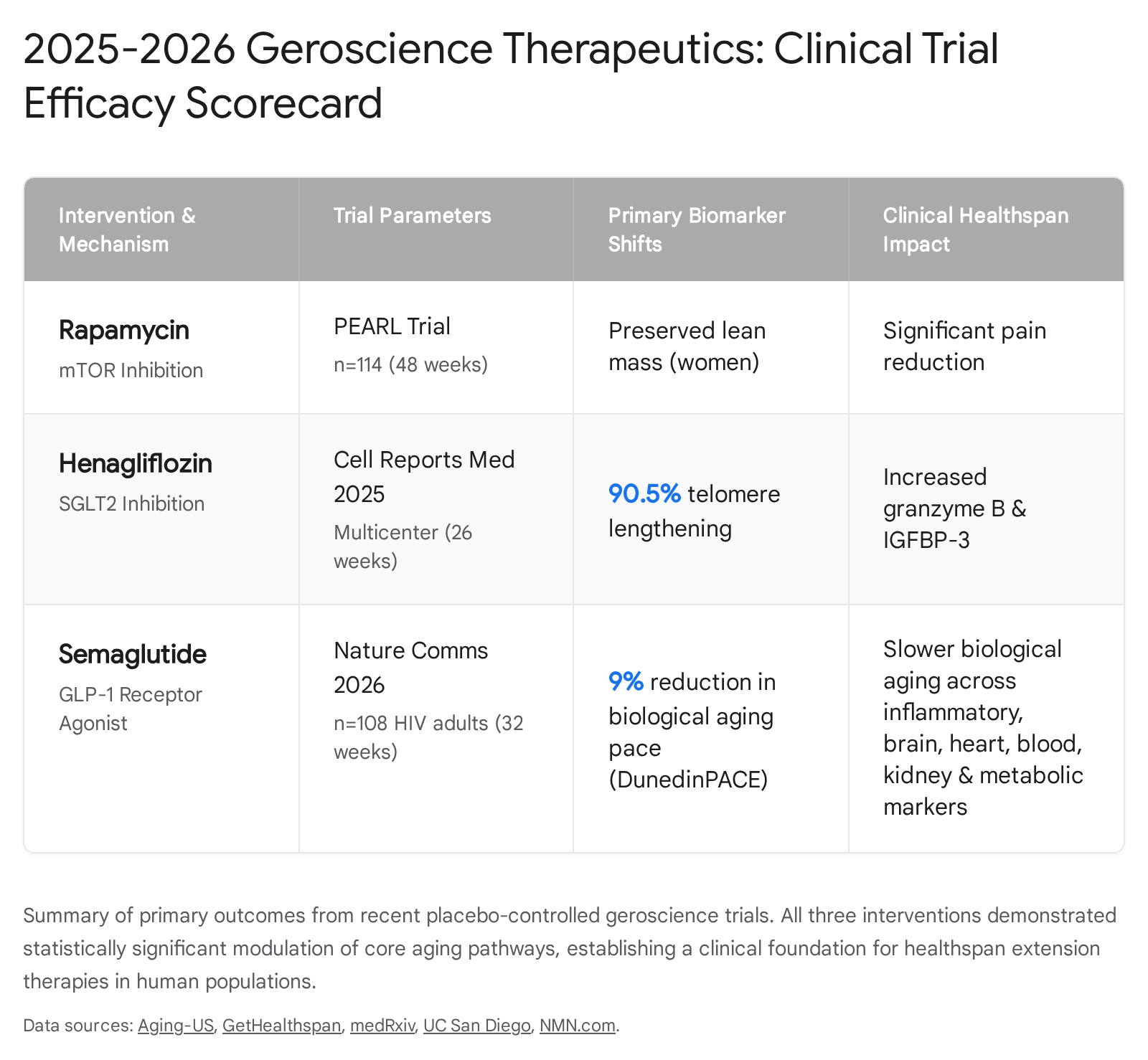
The PEARL trial, sponsored by AgelessRx, represents the longest and most comprehensive decentralized clinical evaluation of rapamycin for healthy aging performed to date.27 The 48-week, double-blind, randomized, placebo-controlled trial successfully followed 114 normative-aging adults (aged 50 to 85) who were administered either a placebo, 5 mg, or 10 mg of compounded rapamycin once per week.27
Statistical Power and Clinical Efficacy Outcomes
From a statistical standpoint, the trial design faced certain limitations. Due to its relatively small cohort size (n=114) and the inclusion of a highly disparate age range, the study was partially underpowered.29 Consequently, the primary pre-registered endpoint—a drastic reduction in visceral adipose tissue—did not reach statistical significance across the entire cohort.27
However, the dataset yielded several statistically significant secondary outcomes that strongly validate rapamycin's healthspan-extending potential in humans. Specifically, women in the rapamycin treatment groups demonstrated highly significant improvements in the preservation of lean muscle tissue, a critical metric for combating age-related sarcopenia and frailty.26 Furthermore, across both the 5 mg and 10 mg groups, participants reported statistically significant improvements in pain reduction, emotional well-being, and overall general health parameters relative to the placebo cohort.25 While men showed positive trending improvements in bone mineral content, these specific metrics did not reach the rigorous threshold for statistical significance due to cohort size limitations.29
Crucially, the PEARL trial successfully achieved its primary safety objectives. It confirmed the clinical safety profile of low-dose, intermittent administration over a sustained 12-month period. The study noted no severe adverse immune suppression patterns, no increased incidence of severe cold/flu-like illnesses, and no impaired recovery times compared to the placebo cohort.31 The peer acceptance of these results marks rapamycin's transition from a purely experimental longevity molecule to an active, real-world clinical tool, while simultaneously underscoring the necessity for highly personalized dosing protocols and rigorous lab monitoring to maximize benefit and mitigate individual side effects.25
Pharmacological Geroscience (Part 2): SGLT2 Inhibitors, Senotherapeutics, and Telomere Preservation
Concurrently, a separate class of metabolic drugs has emerged as a powerhouse in the geroscience landscape. Sodium-glucose cotransporter 2 (SGLT2) inhibitors, originally engineered to promote urinary glucose excretion in the proximal tubules of type 2 diabetes patients, have demonstrated profound, systemic cardio-renal protective effects that operate entirely independently of their glycemic control mechanisms.7
In 2025, a landmark double-blind, randomized, placebo-controlled multicenter study published in Cell Reports Medicine provided the first direct, large-scale human evidence that an SGLT2 inhibitor—specifically henagliflozin—actively and comprehensively modulates core biological aging biomarkers.33 Over a 26-week intervention period, patients treated with daily henagliflozin exhibited systemic metabolic and genomic shifts that remarkably mirrored the physiological adaptations seen during caloric restriction and ketogenic states.32
Statistical Validation of Genetic and Immunological Rejuvenation
The statistical findings of the henagliflozin trial were unprecedented in human geroscience. The most groundbreaking outcome was a highly significant increase in leukocyte telomere length. Telomeres are protective caps on the ends of chromosomes that naturally erode and shorten with every cell division as an organism ages.35 In this trial, an astonishing 90.5% of participants in the henagliflozin arm demonstrated measurable, statistically significant telomere lengthening, compared to only 65.6% in the placebo group.33 This represents an unusually rapid and positive shift for a genetic metric that typically exhibits only slow, unidirectional deterioration.33
Furthermore, the administration of henagliflozin beneficially altered the Growth Hormone/Insulin-like Growth Factor-1 (GH/IGF-1) axis.33 The drug significantly raised levels of IGFBP-3 (), a binding protein that effectively sequesters free IGF-1.33 This elevation signals a reduction in free IGF-1 exposure, shifting the cellular physiological state away from constant anabolic growth and toward a state of metabolic preservation, damage repair, and stress resistance—a pattern heavily linked with extended lifespan in diverse animal models.33

Immunologically, the drug demonstrated clear and potent early senotherapeutic properties.32 The expression of granzyme B—a key cytotoxic enzyme utilized by cytotoxic T lymphocytes (CTLs) to hunt down and destroy senescent and irreparably damaged cells—was significantly upregulated in the treatment group ().33 Importantly, this heightened, highly targeted immune surveillance did not trigger a dangerous rise in broad, systemic inflammatory cytokines (such as IL-6, IL-10, or IFN-), indicating that the drug restored a youthful, targeted clearance mechanism rather than inciting broad autoimmune activation.33


Combined with a significant elevation in -hydroxybutyrate—indicating a transition toward cleaner mitochondrial fat oxidation and lower metabolic stress—the peer consensus across the scientific and medical communities now views SGLT2 inhibitors as exceptionally potent, multi-pathway gerotherapeutics capable of delaying cellular senescence and preventing age-associated vascular pathology far beyond their original diabetic indications.7
Pharmacological Geroscience (Part 3): GLP-1 Agonists and Epigenetic Deceleration
Perhaps the most culturally pervasive and financially successful class of therapeutics in recent years, Glucagon-like peptide-1 (GLP-1) receptor agonists, have rapidly transcended their primary regulatory indications for obesity and type 2 diabetes to reveal potent, highly validated anti-aging properties. Because GLP-1 receptors are ubiquitously distributed across the brain, heart, liver, kidneys, and skeletal muscle, medications like semaglutide address multiple interconnected hallmarks of aging simultaneously, intervening precisely in chronic inflammation, mitochondrial stress, and deregulated nutrient sensing.3
The systemic physiological benefits of GLP-1 therapies are exhaustively documented. Large-scale landmark clinical trials, including LEADER, SUSTAIN-6, and SELECT, have demonstrated major reductions in heart attacks, strokes, and cardiovascular death, with benefits extending even to non-diabetic individuals.38 The FLOW trial proved significant kidney protection, cutting the risk of serious kidney outcomes by 24% () and reducing all-cause mortality by 20%.39 Furthermore, the ESSENCE Phase 3 trial showed unprecedented improvements in metabolic liver disease, with 62.9% of patients achieving resolution of steatohepatitis.38

However, direct evidence of GLP-1's impact on systemic biological aging at the DNA level was not definitively confirmed until a landmark study was published in Nature Communications in May 2026.10 Researchers at the University of California San Diego analyzed data from a highly controlled, randomized, double-blind, placebo-controlled trial consisting of 108 adults suffering from HIV-associated lipohypertrophy.10 This specific patient population is historically subject to drastically accelerated biological aging and early mortality, even when their viral load is well-controlled with antiretroviral therapy.10
Epigenetic Clocks and the Quantifiable Reversal of Aging
Over a 32-week treatment period, half of the participants received weekly injections of semaglutide, while the control group received a placebo.10 To quantify the results, the research team applied multiple advanced "epigenetic clocks" to meticulously map cellular aging.10 These clocks measure the precise patterns of DNA methylation—the chemical alterations and marks on the DNA that dictate gene expression and cellular function without altering the underlying genetic sequence.10
The statistical results generated by these clocks were robust and definitive. Participants treated with semaglutide exhibited a widespread, highly consistent pattern of decelerated biological aging across multiple organ systems, specifically including the brain, heart, liver, and immune system.10 Most notably, measurements derived from the highly validated DunedinPACE epigenetic clock revealed a 9% deceleration in the overall pace of biological aging compared directly to the placebo group.10 Additionally, the PCGrimAge clock, which is specifically calibrated to predict mortality, recorded significant reductions in biological processes explicitly linked to age-related disease and all-cause mortality risk.10 The peer acceptance of this trial formally and permanently elevates GLP-1 agonists from basic metabolic stabilizers to verified agents of epigenetic preservation and biological age reversal.10
Exhaustive Comparison of Statistical Validity and Peer Acceptance Across Therapeutics
While the 2025–2026 research cycle brought massive successes in SGLT2 and GLP-1 research, it also delivered necessary, sobering reality checks for older longevity hypotheses, prompting a major shift in peer consensus regarding the viability of direct senolytics and metformin.
The Senolytic Stagnation
Senolytics—a class of drugs explicitly designed to actively hunt and induce apoptosis (cell death) in senescent cells—were long considered the holy grail of longevity medicine.43 Following highly successful preclinical mouse data published in the early 2010s, massive venture capital investment poured into the sector.43 However, the translation to human clinical trials has been plagued by statistical failure and lack of efficacy.
The highest-profile failure occurred with Unity Biotechnology’s lead senolytic candidate UBX1325 (a BCL-xL inhibitor). After failing to meet primary endpoints in a Phase 2 trial for wet age-related macular degeneration in 2023, UBX1325 failed again in March 2025, missing its primary analysis endpoint in the ASPIRE trial for diabetic macular edema (DME).43 As of mid-2026, despite dozens of biotech companies entering the race, absolutely no senolytic drug has received FDA approval.43 While off-label combinations like dasatinib and quercetin (D+Q) remain in experimental use within private longevity clinics, the peer consensus has aggressively shifted away from direct cellular destruction toward the "senomorphic" and metabolic approaches utilized by SGLT2 inhibitors and rapamycin, which suppress the toxic SASP output without requiring mass cellular apoptosis.7
The Re-evaluation of Metformin
Similarly, the anti-diabetic drug metformin, heavily promoted for decades as a foundational, universally applicable geroprotector, faces mounting academic and statistical scrutiny. The highly anticipated Targeting Aging with Metformin (TAME) trial—designed to follow over 3,000 individuals aged 65-79 across 14 leading research institutions for six years to prove metformin delays age-related chronic diseases—remains structurally prepared but has utterly stagnated.46 As of 2026, the trial has failed to publish any efficacy results proving it slows aging or extends healthspan in humans.47
Concurrently, heavily damaging statistical data has emerged against metformin's universal utility. The 21-year follow-up data from the DPP/DPPOS study, published in JAMA in June 2026, evaluated 1,173 adults with prediabetes.47 The study revealed that patients originally assigned to intensive lifestyle interventions had a significantly lower risk of developing multimorbidity over the two decades.47 In stark contrast, those assigned to metformin failed to show a statistically significant difference in multimorbidity risk compared to the placebo control group.47 Furthermore, recent intervention trials have demonstrated that metformin administration in older adults actively inhibits the muscle hypertrophy and strength gains derived from resistance training, severely complicating its use as a healthspan enhancer in populations vulnerable to sarcopenia.48 Consequently, leading geroscience experts have openly stated that claims of metformin slowing human aging are vastly ahead of the actual data, shifting the field's focus heavily toward the undeniable efficacy of GLP-1 and SGLT2 therapeutics.47
Redefining Quality Life: The Conceptual Evolution of "Experienced Longevity"
The culmination of these genetic discoveries, mitochondrial pathomechanisms, and successful pharmacological interventions necessitates a fundamental rethinking of how aging science is measured, conceptualized, and valued by the medical community. The traditional reliance on absolute chronological lifespan as the primary outcome variable intrinsically treats time as a uniform, empty container of value, entirely ignoring the physiological density, independence, and subjective quality of those years.4
Contemporary medical leaders and geroscience practitioners explicitly argue that human clinical trials cannot afford to wait for mortality as the primary endpoint.4 Instead, the clinical paradigm is actively shifting to target health-adjusted survival, prioritizing endpoints such as delayed multimorbidity, preserved physical function, immune resilience, and cognitive fidelity.4 The integration of the "Neuroenergetic Constraint Model," introduced in early 2026, provides a robust biological framework for this shift.50
This advanced model posits that age-related reductions in mitochondrial efficiency, coupled with increased vascular stiffness, actively diminish the brain's "neuroenergetic reserve".50 This reduced energetic flexibility severely limits high-fidelity cognitive updating and weakens "event segmentation" during ongoing daily experiences.50 Consequently, as physiological aging progresses, extended chronological intervals are subjectively experienced by the individual as "compressed," empty, or lacking in detail.50
By deploying interventions that actively restore mitochondrial function and reduce vascular inflammation—such as the targeted use of SGLT2 inhibitors or the CGAS dampening mechanisms modeled in the killifish—medicine is attempting to do far more than merely extend the clock. The goal is to increase "experiential density"—defined as the number and distinctiveness of retrievable experience units per unit of time.50 This ensures that the extended years afforded by modern medicine are actually lived with full cognitive clarity, physical independence, and psychological vitality, fulfilling the ultimate promise of the geroscience hypothesis.5
Conclusion
The 2025–2026 era of geroscience research has conclusively and undeniably established that human longevity is not an impenetrable biological absolute, but rather a highly orchestrated, manipulatable interaction of genetic architecture, mitochondrial regulation, and epigenetic plasticity. The Leiden Longevity Study's brilliant isolation of the rare CGAS rs200818241 variant—and the subsequent unmasking of the mitochondrial pathomechanisms driving inflammaging by the Max Planck Institute—provides an unprecedented, high-resolution map of how cellular senescence is triggered and, more importantly, how it can be therapeutically dampened.16
Simultaneously, the rigorous statistical dissection of dietary interventions at the Jackson Laboratory proves that precision medicine must account for unique interstrain genetic heterogeneity and sexual dimorphism to effectively optimize human healthspan.22 In the clinical arena, the highly successful human trials of rapamycin, henagliflozin, and semaglutide validate the core geroscience hypothesis: targeted modulation of the biological hallmarks of aging can decisively delay physiological decline, lengthen protective telomeres, and quantifiably decelerate the pace of epigenetic aging in human subjects.10
As the global healthcare focus shifts irrevocably away from the simple, archaic prolongation of chronological lifespan toward the qualitative, biomarker-driven preservation of healthspan, these combined biological insights provide the foundation for a medical future where advanced chronological age is no longer synonymous with multimorbidity, frailty, and functional collapse. Through the integration of genetics, metabolism, and pharmacology, the compression of morbidity is rapidly transitioning from a theoretical aspiration into an achievable clinical reality.
Works cited
- Radar Spotlight: Longevity Science Crosses the Clinical Threshold - GESDA Global, accessed July 8, 2026, https://www.gesda.global/radar-spotlight-longevity-science-crosses-clinical-threshold/
- The quest for a longer healthspan - The Jackson Laboratory, accessed July 8, 2026, https://www.jax.org/news-and-insights/2026/june/the-quest-for-a-longer-healthspan
- Extending Healthspan via GLP-1 Receptor Agonist: Insights and Perspectives, accessed July 8, 2026, https://www.xiahepublishing.com/2472-0712/ERHM-2025-00036
- Healthy life extension: Geroscience's north star - Aging-US, accessed July 8, 2026, https://www.aging-us.com/article/206359/text
- Fifth Geroscience Summit: Revisiting the Geroscience Hypothesis - Focus on Health, accessed July 8, 2026, https://www.nia.nih.gov/research/dab/workshops/fifth-geroscience-summit-revisiting-geroscience-hypothesis-focus-health
- Longevity unlocked: From lifespan to healthspan extension - IQVIA, accessed July 8, 2026, https://www.iqvia.com/locations/emea/blogs/2026/04/longevity-unlocked-from-lifespan-to-healthspan-extension
- Top 10 Longevity & Anti-Aging Breakthroughs of 2025: What the Year Taught Us About Extending Human Healthspan, accessed July 8, 2026, https://www.gethealthspan.com/research/article/top-ten-longevity-anti-aging-breakthroughs-of-2025
- In Pursuit of Healthspan — Guided by AARP Geroscience Principles, accessed July 8, 2026, https://www.aarpinternational.org/the-journal/current-edition/journal-articles-blog/2025/06/aarp-geroscience-principles
- Long-lived families reveal a rare genetic clue to healthy aging | ScienceDaily, accessed July 8, 2026, https://www.sciencedaily.com/releases/2026/06/260621060301.htm
- Study: Popular GLP-1 Drug May Slow Down Biological Aging - UC San Diego Today, accessed July 8, 2026, https://today.ucsd.edu/story/study-popular-glp-1-drug-may-slow-down-biological-aging
- New research helps understand how a long, healthy lifespan may be passed down across generations | EurekAlert!, accessed July 8, 2026, https://www.eurekalert.org/news-releases/1131686
- Why Some Families Stay Healthy for Decades Longer - SciTechDaily, accessed July 8, 2026, https://scitechdaily.com/why-some-families-stay-healthy-for-decades-longer/
- Rare longevity-associated variants, including a reduced-function mutation in cGAS, identified in multigenerational long-lived families - PubMed, accessed July 8, 2026, https://pubmed.ncbi.nlm.nih.gov/41427385/
- Rare longevity-associated variants, including a reduced-function mutation in cGAS, identified in multigenerational long-lived families - PMC, accessed July 8, 2026, https://pmc.ncbi.nlm.nih.gov/articles/PMC12713140/
- Rare longevity-associated variants, including a reduced-function mutation in cGAS, identified in multigenerational long-lived fa - bioRxiv, accessed July 8, 2026, https://www.biorxiv.org/content/biorxiv/early/2025/12/09/2025.12.04.689698.full.pdf
- Rare longevity-associated variants, including a reduced-function mutation in cGAS, identified in multigenerational long-lived families | bioRxiv, accessed July 8, 2026, https://www.biorxiv.org/content/10.64898/2025.12.04.689698v1.full-text
- Scientists Uncover a Rare Genetic Key to Longevity That Could Delay Chronic Disease by 13 Years - Inc. Magazine, accessed July 8, 2026, https://www.inc.com/lucia-auerbach/scientists-uncover-a-rare-genetic-key-to-longevity-that-could-delay-chronic-disease-by-13-years/91361729
- Faulty Mitochondrial DNA Copying Might Cause Inflammaging - Lifespan Research Institute, accessed July 8, 2026, https://lifespan.io/faulty-mitochondrial-dna-copying-might-cause-inflammaging/
- Mitochondrial DNA as a driver of inflammation via the cGAS-STING pathway - ResearchGate, accessed July 8, 2026, https://www.researchgate.net/publication/403384823_Mitochondrial_DNA_as_a_driver_of_inflammation_via_the_cGAS-STING_pathway
- New research helps understand how a long, healthy lifespan may be passed down across generations - bionity.com, accessed July 8, 2026, https://www.bionity.com/en/news/1188955/new-research-helps-understand-how-a-long-healthy-lifespan-may-be-passed-down-across-generations.html
- 2026 Press Releases - ESHG, accessed July 8, 2026, https://www.eshg.org/news-home/for-media/2026-press-releases
- Genetic regulation of fasting-induced longevity effects | Genetics ..., accessed July 8, 2026, https://academic.oup.com/genetics/article/233/1/iyag045/8488936
- Study probes how eating less can extend lifespan - The Jackson Laboratory, accessed July 8, 2026, https://www.jax.org/news-and-insights/2024/october/study-probes-how-eating-less-can-extend-lifespan
- Genetic regulation of fasting-induced longevity effects - PMC - NIH, accessed July 8, 2026, https://pmc.ncbi.nlm.nih.gov/articles/PMC12424985/
- Rapamycin Benefits: An Evidence-Based Guide to What the Drug Can—and Cannot—Do for Healthy Aging | Healthspan, accessed July 8, 2026, https://www.gethealthspan.com/research/article/rapamycin-benefits
- 2025 Wrapped - AgelessRx, accessed July 8, 2026, https://agelessrx.com/2025-wrapped/
- Low-Dose Rapamycin Improves Muscle Mass and Well-Being in Aging Adults, accessed July 8, 2026, https://www.aging-us.com/news-room/low-dose-rapamycin-improves-muscle-mass-and-well-being-in-aging-adults
- The Largest Rapamycin Trial Ever Conducted in Humans Is Now Underway. Here Is What It Is Designed to Answer. | Healthspan, accessed July 8, 2026, https://www.gethealthspan.com/research/article/human-rapamycin-trial-longevity-evidence
- Safety and efficacy of rapamycin on healthspan metrics after one year: PEARL Trial Results, accessed July 8, 2026, https://www.medrxiv.org/content/10.1101/2024.08.21.24312372v4.full-text
- Rapamycin's 1-Year Impact on Healthspan—PEARL Trial Results - Aging-US, accessed July 8, 2026, https://www.aging-us.com/interviews/rapamycin-s-1-year-impact-on-healthspan-pearl-trial-results
- Influence of rapamycin on safety and healthspan metrics after one year: PEARL trial results, accessed July 8, 2026, https://pmc.ncbi.nlm.nih.gov/articles/PMC12074816/
- Dissecting out the unexpected effects of SGLT2 inhibitors on human ageing - PubMed, accessed July 8, 2026, https://pubmed.ncbi.nlm.nih.gov/42132232/
- A Multi-System Shift: How SGLT2 Inhibitors Target the Hallmarks of Aging—Telomeres, Immune Function, and Metabolic Reprogramming | Healthspan, accessed July 8, 2026, https://www.gethealthspan.com/research/article/sglt2-inhibitors-longevity-markers
- Dissecting out the unexpected effects of SGLT2 inhibitors on human aging - ResearchGate, accessed July 8, 2026, https://www.researchgate.net/publication/404877559_Dissecting_out_the_unexpected_effects_of_SGLT2_inhibitors_on_human_ageing
- Diabetes Drug Henagliflozin Shows Signs of Slowing Biological Aging in Clinical Trial, accessed July 8, 2026, https://www.nmn.com/news/diabetes-drug-henagliflozin-shows-signs-of-slowing-biological-aging-in-clinical-trial
- (PDF) Effect of henagliflozin on aging biomarkers in patients with type 2 diabetes: A multicenter, randomized, double-blind, placebo-controlled study - ResearchGate, accessed July 8, 2026, https://www.researchgate.net/publication/395279766_Effect_of_henagliflozin_on_aging_biomarkers_in_patients_with_type_2_diabetes_A_multicenter_randomized_double-blind_placebo-controlled_study
- GLP-1 Care Program - Healthspan, accessed July 8, 2026, https://www.gethealthspan.com/programs/glp1-care
- GLP-1 Receptor Agonists at the Crossroads of Metabolism and Aging: Assessing the Evidence for Multi-Hallmark Intervention | Healthspan, accessed July 8, 2026, https://www.gethealthspan.com/research/article/glp1-longevity-connection
- GLP-1s and Longevity: What the Science Actually Shows in 2026 - Scale Solutions, accessed July 8, 2026, https://scale-solutions.com/glp-1-longevity-science-2026/
- Semaglutide and Aging Markers: What the Evidence Really Shows, accessed July 8, 2026, https://www.themedicinecheck.com/latest/semaglutide-aging-markers-healthspan
- UC San Diego: Popular GLP-1 drug may slow down biological aging, accessed July 8, 2026, https://www.eatg.org/hiv-news/uc-san-diego-popular-glp-1-drug-may-slow-down-biological-aging/
- Popular Weight-Loss Drug Found To Slow Biological Aging in Landmark Human Trial, accessed July 8, 2026, https://scitechdaily.com/popular-weight-loss-drug-found-to-slow-biological-aging-in-landmark-human-trial/
- Senolytics in 2026: Clinical Trials, Failures, and What Longevity Clinics Are Actually Offering, accessed July 8, 2026, https://worldlongevityclinics.com/news/senolytics-2026-clinical-trials-failures-what-clinics-offer/
- Longevity and Healthspan - Cure., accessed July 8, 2026, https://wewillcure.com/insights/longevity-and-healthspan
- Targeting Cell Senescence and Senolytics: Novel Interventions for Age-Related Endocrine Dysfunction - Oxford Academic, accessed July 8, 2026, https://academic.oup.com/edrv/article/45/5/655/7631421
- TAME - Targeting Aging with Metformin - American Federation for Aging Research, accessed July 8, 2026, https://www.afar.org/tame-trial
- Metformin for Longevity in 2026: TAME, Dosage, Muscle and B12 - Progevita, accessed July 8, 2026, https://progevita.com/en/blog/metformin-longevity-what-science-says/
- Metformin for Longevity and Sarcopenia: A Therapeutic Paradox in Aging - PMC - NIH, accessed July 8, 2026, https://pmc.ncbi.nlm.nih.gov/articles/PMC12938515/
- Nir Barzilai: “Positive Evidence for Metformin is Mounting” - Lifespan Research Institute, accessed July 8, 2026, https://lifespan.io/nir-barzilai-positive-evidence-for-metformin-is-mounting/
- Beyond lifespan and healthspan: a biological framework for experienced longevity, accessed July 8, 2026, https://www.frontiersin.org/journals/aging-neuroscience/articles/10.3389/fnagi.2026.1815030/full
- Los Angeles Times spotlights the Field of Geroscience, accessed July 8, 2026, https://www.afar.org/news/los-angeles-times-spotlights-the-field-of-geroscience