
Epistemological Foundations, Taxonomic Structures, and the Frontier Horizons of Mathematical Sciences
Mathematics is widely characterized as an absolute, universal language that transcends human culture, geography, and historical epoch. However, a rigorous examination of mathematical practice reveals a complex tension between invariant abstract truths and the culturally contingent symbolisms, base systems, and measurement units used to express them1. The representation of numerical quantity is mediated by human semiotic frameworks, historical measurement scales, and structural conventions1. This report provides an exhaustive investigation into global variations of numerical representation, evaluates the boundaries of mathematical universality, traces the genealogical evolution of mathematical disciplines into the contemporary Mathematics Subject Classification (MSC2020) taxonomy, details frontier breakthroughs such as the recent proof of the Geometric Langlands Conjecture, evaluates the transformative roles of Artificial Intelligence (AI) and quantum computing, and assesses the shifting imperative of human mathematical literacy in the modern world.
Culturally Dependent Numeration and Measurement Systems
Human societies have independently devised diverse frameworks to formalize quantity, spatial relationships, and temporal cycles1. The representation of numbers is fundamentally shaped by the choice of numerical base, positional notation, sub-base structures, and the presence or operational nature of zero2.
Comparative Numerical Paradigms
Ancient Mesopotamian civilization developed one of the earliest known positional number systems over four thousand years ago, employing a sexagesimal (base-60) structure pressed into wet clay tablets in cuneiform script4. Rather than inventing 60 distinct symbols, Babylonian scribes built intermediate digits from 1 to 59 additively using two primary cuneiform marks: a narrow vertical wedge representing 1 and a wide corner wedge representing 104.
The choice of base 60 offered distinct computational advantages due to its status as a highly composite number4. Possessing twelve divisors—1, 2, 3, 4, 5, 6, 10, 12, 15, 20, 30, and 60—base 60 enabled exact fractional divisions without generating infinite repeating expansions for standard commercial, land surveying, and astronomical calculations4. Early Babylonian mathematics lacked an unambiguous placeholder for empty positions, requiring context to distinguish whether a symbol group denoted 1, 60, or 3,6004. By the Seleucid era, scribes introduced a dedicated empty-place marker sign, representing one of history's first positional placeholders, though it functioned primarily as a structural marker rather than an independent mathematical operand4. The legacy of this sexagesimal paradigm persists in modern chronometry (60 seconds per minute, 60 minutes per hour) and geometry (360 degrees in a full circle)4.
In contrast, Mesoamerican civilizations, most notably the Maya, developed an independent vigesimal (base-20) positional numeral system by the pre-Classic period2. The Mayan system employed a vertical place-value layout constructed additively from three basic symbols: a dot representing 1, a horizontal bar representing 5, and a stylized shell glyph representing 02. The Mayan shell glyph, documented by at least 36 BCE, represents one of the earliest conceptualizations of zero as both a positional placeholder and a formal numerical value2.
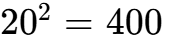
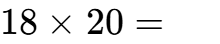
While standard Mayan arithmetic operated on pure powers of 20 (), the Mayan calendar system (the Long Count) introduced a structural modification2. In calendar calculations, the third positional tier was modified from to (the tun), aligning numerical place values with the solar year of approximately 365.24 days2. Subsequent positional tiers resumed multiplication by factors of 20 (; )2. This structural adaptation demonstrates how empirical environmental observation can override pure algebraic symmetry within regional mathematical frameworks2.



Numeral System | Base Structure | Primary Graphic Symbols | Operational Zero Concept | Positional Alignment | Structural Characteristics and Enduring Impact |
Babylonian | Sexagesimal (Base-60)4 | Cuneiform unit wedge (1), corner wedge (10)4 | Late Seleucid placeholder marker ()4 | Horizontal (Left to Right)4 | Sub-base 10 within base 606; foundation of modern 60-minute time and 360° angular systems4. |
Mayan | Vigesimal (Base-20)2 | Dot (1), Bar (5), Shell glyph (0)2 | Fully integrated operational zero (shell glyph)2 | Vertical (Bottom to Top)2 | Sub-base 53; modified 3rd position () for astronomical Long Count calendar tracking2. |
Hindu-Arabic | Decimal (Base-10) | Ten distinct digits () | Full abstract zero (śūnya) as digit and operand | Horizontal (Left to Right) | Symmetric positional power scale (); standard global medium for scientific notation. |
Roman | Non-Positional Decimal | Alphabetic letters () | Absent; no zero symbol or concept | Horizontal (Left to Right) | Additive and subtractive notation; computationally restrictive for complex arithmetic operations. |




Units of Measurement: Customary Arbitrary Scales versus Physical Invariants
The fragmentation of quantitative units further illustrates how human mathematical representations diverge. Measurement systems fall into two broad epistemological categories: anthropometric customary frameworks and standardized dimensional systems.
Imperial and United States Customary systems were constructed upon localized human body dimensions and agricultural benchmarks, such as the foot, the inch based on three barleycorns, and the acre based on a day's plowing. These systems rely on non-uniform, arbitrary conversion ratios, including 12 inches per foot, 3 feet per yard, 1,760 yards per mile, and 16 ounces per pound. The absence of a uniform scaling factor creates operational friction, requiring extra arithmetic conversions that obscure proportional relationships in physical equations.
In contrast, the Metric System and the modern International System of Units (SI) were constructed around a uniform decimal scaling factor (), aligning unit conversions directly with positional decimal notation. Modern SI definitions tie base units—such as the meter, second, kilogram, ampere, kelvin, mole, and candela—directly to invariant physical constants of the universe, including the speed of light in a vacuum (), the Planck constant (), and the unperturbed ground-state hyperfine transition frequency of the cesium-133 atom ().


The Universality Paradox: Invariance versus Symbolic Mediation
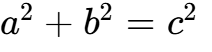
The assertion that mathematics is an absolute universal language obscures a fundamental distinction between ontological invariance and semiotic representation. Ontological invariance refers to the objective, mind-independent structural properties of the universe1. Properties such as prime number distributions, topological invariants, geometric space curvature, and differential field equations remain invariant across all potential observers. The ratio of a circle's circumference to its diameter () or the hypotenuse relationship in Euclidean geometry () holds true regardless of the cognitive architecture or numerical base system of the intelligence evaluating it.

However, mathematics as practiced by human beings is a symbolic technology1. The operational syntax of mathematics depends heavily on base selection, visual notation, and linguistic constructs1. For example, basic arithmetic shortcuts are artifacts of chosen base structures rather than universal mathematical laws. The rule that an integer is divisible by 9 if and only if the sum of its digits is divisible by 9 holds exclusively in base-10 systems, because . In a duodecimal (base-12) system, the corresponding digital root divisibility rule applies to 11, whereas divisibility by 3 or 4 is determined simply by inspecting the final digit.

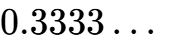
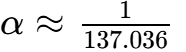
Similarly, the distinction between terminating and infinite repeating fractional expansions is entirely an artifact of a base's prime factors. The fraction one-third yields an infinite repeating sequence in decimal notation (), whereas in the Babylonian sexagesimal system it resolves to a clean, finite single-place expression (, representing twenty sixtieths)4. Furthermore, when physical quantities are converted into numerical expressions, the choice of unit systems dictates the numerical values of physical constants. While dimensionless constants such as the fine-structure constant () are strictly universal, dimensional constants such as Newton's gravitational constant () depend entirely on human unit definitions.


Human mathematical frameworks are therefore culturally conditioned cognitive tools placed around universal structural invariants1. The illusion of absolute mathematical universality persists because modern globalization standardized one specific semiotic framework—the Hindu-Arabic decimal system paired with metric SI units and Western algebraic notation—effectively obscuring alternative historical paradigms.
Evolutionary Genealogy of Mathematical Disciplines
Mathematical inquiry has evolved through a continuous historical process of abstraction, generalizing empirical observations of counting and space into formal structural frameworks.
The trajectory of mathematical evolution progressed through distinct structural phases:
- Empirical Utility (Arithmetic and Geometry): Ancient mathematics originated as two separate empirical activities: arithmetic, the discrete science of counting, commerce, and calendar tracking; and geometry, the continuous science of land survey, construction, and spatial alignment. Early Egyptian and Babylonian mathematicians formulated operational recipes for arithmetic steps and surface area calculations without constructing formal deductive proofs.
- Axiomatic Formalization (Classical Geometry and Number Theory): Ancient Greek mathematicians, led by Thales, Pythagoras, and Euclid, transformed spatial measurement into an axiomatic deductive system. Euclid's Elements established the paradigm of deriving complex geometric theorems from a small set of fundamental postulates. Concurrently, theoretical number theory emerged through the systematic study of prime numbers, divisibility, and geometric proportions.
- Symbolic Abstraction (Algebra and Trigonometry): During the Islamic Golden Age, scholars such as Muhammad ibn Musa al-Khwarizmi unified arithmetic calculation and geometric principles into algebra (al-jabr), introducing systematic methods for balancing and solving polynomial equations using abstract variables. Concurrently, Hellenistic, Indian, and Islamic astronomers developed trigonometry, mapping quantitative relationships between central angles and chord lengths.
- Synthesis of Continuous Quantity and Space (Analytic Geometry and Calculus): In the seventeenth century, René Descartes and Pierre de Fermat connected geometry and algebra through the Cartesian coordinate system, allowing geometric curves to be expressed as algebraic equations. Building upon this synthesis, Isaac Newton and Gottfried Wilhelm Leibniz independently developed calculus, creating the analytical framework required to model continuous change, instantaneous rates of motion, and dynamic physical systems.
- Structural Generalization (Abstract Algebra, Differential Geometry, and Analysis): The nineteenth and twentieth centuries witnessed an unprecedented drive toward abstraction. The rigorous refounding of calculus by Cauchy and Weierstrass created modern real and complex analysis. The discovery of non-Euclidean geometries by Gauss, Lobachevsky, and Bolyai demonstrated that physical space need not conform to Euclidean postulates, laying the groundwork for differential geometry. Simultaneously, Galois, Abel, and Hamilton generalized arithmetic operations into abstract algebra, formalizing groups, rings, fields, and vector spaces. Topology emerged to evaluate spatial properties preserved under continuous deformation, independent of rigid distance metrics.
- Taxonomic Integration (Category Theory and Foundational Logic): In the mid-twentieth century, category theory was formulated by Samuel Eilenberg and Saunders Mac Lane, providing an overarching structural meta-language capable of mapping equivalences (functors) between distinct domains, such as algebraic topology and algebraic geometry.
Contemporary Structural Architecture of Mathematics: The MSC2020 Taxonomy
To systematically organize research literature, the American Mathematical Society (Mathematical Reviews) and zbMATH jointly maintain the Mathematics Subject Classification scheme9. The active iteration, MSC2020, organizes the mathematical sciences into a three-level hierarchical structure consisting of 63 primary two-digit categories, 529 secondary three-digit categories, and 6,022 tertiary five-digit subcategories12.
An MSC2020 classification code uses five alphanumeric characters10. For instance, code 53C20 is broken down as follows:
- 53 (First Level): Differential Geometry10.
- 53C (Second Level): Global Differential Geometry10.
- 53C20 (Third Level): Global Riemannian Geometry.
Structural updates in MSC2020 reflect the growing influence of computation, data analysis, and modern physics13. Uniform hyphenated subclasses have been integrated across main categories13:
- -08: Computational methods13.
- -10: Mathematical modeling and simulation13.
- -11: Research data (such as integer sequences in the OEIS or Calabi-Yau variety databases)13.
New explicit categories introduced in MSC2020 include 18M (Monoidal categories and operads), 18N (Higher categories and homotopical algebra), 53E (Geometric evolution equations), 62R (Topological and functional data analysis), and 68P27 (Privacy of data)13.
The table below outlines all 63 primary two-digit MSC2020 classifications, covering the full scope of modern pure, applied, and interdisciplinary mathematics9.
Code | Primary Classification Title | Subdisciplinary Scope and Core Research Focus |
00 | General and overarching topics; collections9 | Philosophy of mathematics, didactics, formularies, recreational mathematics14. |
01 | History and biography9 | Historical developments, biographies of mathematicians, primary source texts10. |
03 | Mathematical logic and foundations9 | Model theory, computability, set theory, proof theory, intuitionistic logic10. |
05 | Combinatorics9 | Graph theory, enumeration, design theory, Ramsey theory, extremal set theory14. |
06 | Order, lattices, ordered algebraic structures9 | Partially ordered sets, modular lattices, Boolean algebras14. |
08 | General algebraic systems9 | Universal algebra, equational classes, abstract algebraic structures. |
11 | Number theory9 | Prime distributions, Diophantine equations, modular forms, analytic and algebraic number theory. |
12 | Field theory and polynomials9 | Galois theory, field extensions, commutative polynomials, valuation theory. |
13 | Commutative algebra9 | Commutative rings, modules, primary decomposition, homological algebra. |
14 | Algebraic geometry9 | Schemes, algebraic curves and surfaces, moduli spaces, computational algebraic geometry13. |
15 | Linear and multilinear algebra; matrix theory9 | Vector spaces, matrix transformations, bilinear forms, tensor analysis, eigenvalues. |
16 | Associative rings and algebras9 | Noncommutative rings, representation theory of associative algebras, division rings. |
17 | Nonassociative rings and algebras9 | Lie algebras, Jordan algebras, Superalgebras, Kac-Moody representations. |
18 | Category theory; homological algebra9 | Monoidal categories, higher categories, operads, derived categories13. |
19 | K-theory9 | Algebraic and topological K-theory, Grothendieck groups, index theory. |
20 | Group theory and generalizations9 | Finite and infinite groups, representation theory, computational group theory13. |
22 | Topological groups, Lie groups9 | Harmonic analysis on Lie groups, locally compact groups, algebraic groups10. |
26 | Real functions9 | Derivatives, integrals, real variables, classical real analysis10. |
28 | Measure and integration9 | Measure theory, ergodic theory, vector measures, abstract integration10. |
30 | Functions of a complex variable9 | Holomorphic functions, Riemann surfaces, quasiconformal mappings, potential theory10. |
31 | Potential theory9 | Harmonic functions, Dirichlet problems, capacity theory, subharmonic functions10. |
32 | Several complex variables and analytic spaces9 | Complex manifolds, analytic spaces, CR geometry, Stein spaces. |
33 | Special functions9 | Orthogonal polynomials, hypergeometric functions, elliptic functions9. |
34 | Ordinary differential equations9 | Boundary value problems, stability theory, dynamical systems, ODE bifurcations9. |
35 | Partial differential equations9 | Elliptic, parabolic, and hyperbolic equations, Navier-Stokes, non-linear PDEs9. |
37 | Dynamical systems and ergodic theory9 | Smooth dynamics, topological dynamics, chaotic systems, invariant manifolds13. |
39 | Difference and functional equations9 | Recurrence relations, functional equations, discrete dynamical systems9. |
40 | Sequences, series, summability9 | Convergence of infinite series, summability methods, sequence transformations9. |
41 | Approximations and expansions9 | Interpolation, Chebyshev approximation, asymptotic expansions, splines9. |
42 | Harmonic analysis on Euclidean spaces9 | Fourier transforms, singular integrals, wavelets, Hardy spaces9. |
43 | Abstract harmonic analysis9 | Harmonic analysis on groups and semigroups, dualities, convolution algebras9. |
44 | Integral transforms, operational calculus9 | Laplace, Mellin, and Radon transforms, operational calculus9. |
45 | Integral equations9 | Fredholm, Volterra, and singular integral equations9. |
46 | Functional analysis9 | Banach and Hilbert spaces, operator algebras, distribution theory, Sobolev spaces9. |
47 | Operator theory9 | Linear operators, spectral theory, non-self-adjoint operators, operator semigroups9. |
49 | Calculus of variations and optimal control9 | Optimization, Euler-Lagrange equations, Hamilton-Jacobi theory, optimal control9. |
51 | Geometry9 | Euclidean, non-Euclidean, projective, finite, and incidence geometries9. |
52 | Convex and discrete geometry9 | Convex sets, polytopes, packing and covering, discrete geometry9. |
53 | Differential geometry9 | Riemannian manifolds, symplectic geometry, geometric evolution equations10. |
54 | General topology9 | Metric spaces, compactifications, point-set topology, uniform spaces9. |
55 | Algebraic topology9 | Homotopy groups, homology and cohomology theory, spectral sequences9. |
57 | Manifolds and cell complexes9 | Low-dimensional topology, knot theory, surgery theory, differential topology13. |
58 | Global analysis, analysis on manifolds9 | Infinite-dimensional manifolds, index theorems, global variational analysis9. |
60 | Probability theory and stochastic processes9 | Martingales, Brownian motion, stochastic differential equations, rough analysis13. |
62 | Statistics9 | Statistical inference, regression analysis, topological and functional data analysis13. |
65 | Numerical analysis9 | Numerical linear algebra, ODE/PDE discretization, error analysis9. |
68 | Computer science9 | Automata theory, computational complexity, algorithms, data privacy, cryptography13. |
70 | Mechanics of particles and systems9 | Hamiltonian mechanics, celestial mechanics, rigid body dynamics9. |
74 | Mechanics of deformable solids9 | Continuum mechanics, elasticity, plasticity, fracture mechanics13. |
76 | Fluid mechanics9 | Incompressible and compressible fluids, viscous flow, turbulence, flow control13. |
78 | Optics, electromagnetic theory9 | Maxwell equations, wave propagation, scattering, electromagnetic optimization13. |
80 | Classical thermodynamics, heat transfer9 | Heat conduction, thermodynamic equilibrium, phase transitions9. |
81 | Quantum theory9 | Quantum mechanics, quantum field theory, string theory, operator algebras9. |
82 | Statistical mechanics, structure of matter9 | Ising models, quantum statistical mechanics, phase transitions9. |
83 | Relativity and gravitational theory9 | General relativity, Einstein field equations, black holes, cosmology9. |
85 | Astronomy and astrophysics9 | Stellar dynamics, radiative transfer, galactic structure9. |
86 | Geophysics9 | Hydrology, seismology, climate dynamics, geodetic data analysis9. |
90 | Operations research, mathematical programming9 | Linear and nonlinear programming, integer programming, optimization9. |
91 | Game theory, economics, behavioral sciences9 | Nash equilibria, financial mathematics, microeconomic dynamics9. |
92 | Biology and other natural sciences9 | Population dynamics, mathematical epidemiology, computational genomics9. |
93 | Systems theory; control9 | Feedback control, observability, controllability, robust control systems9. |
94 | Information and communication, circuits9 | Shannon information theory, error-correcting codes, signal processing9. |
97 | Mathematics education9 | Pedagogy, curriculum design, cognitive research in mathematical learning9. |
Frontier Horizons and Unsolved Domains in Mathematics
Mathematics remains an active, unfinished frontier. Significant structural questions persist across both pure theoretical research and applied domain syntheses.
Breakthrough in the Geometric Langlands Program
The Langlands Program—conceived by Robert Langlands in the late 1960s—is often described as a unifying bridge connecting number theory, representation theory, and algebraic geometry15. In 2024, a research team led by Dennis Gaitsgory and Sam Raskin completed the proof of the unramified categorical Geometric Langlands Conjecture in characteristic zero15. Spanning five papers totaling over 800 pages, the proof resolves a major conjecture that drove three decades of research15.
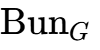
The proof establishes a equivalence between two distinct geometric structures associated with an algebraic curve and a reductive algebraic group 20:

- The Automorphic Side: The derived category of -modules (or -adic sheaves) on the moduli stack of principal -bundles () over 20.
- The Spectral Side: The category of coherent sheaves with nilpotent singular support on the moduli stack of local systems () for the Langlands dual group over 20.




By playing Kac-Moody representation theory against global geometric spectral actions, the authors established the existence of a unique Hecke eigensheaf corresponding to an irreducible local system20. The resolution of this unramified case has opened several active research frontiers15:
- -Adic Local Langlands Correspondence: Translating the Gaitsgory-Raskin proof architecture into the Fargues-Scholze framework on the Fargues-Fontaine curve to equate -adic sheaves on the -stack with coherent sheaves on spectral parameter stacks15.
- -Adic Local Langlands Program: Investigating settings where the coefficient field matches the residue characteristic, replacing classical parameter spaces with the complex Emerton-Gee stack15.
- Ramified and Relative Geometric Langlands: Extending the proof from unramified settings to cases involving wild ramification on punctured surfaces and evaluating boundary conditions in topological quantum field theories22.


Core Unsolved Structural Problems
Beyond the Langlands program, structural inquiries are actively advancing across numerous fields:
- Clay Millennium Problems: Fundamental open questions include proving the existence and smoothness of solutions to the three-dimensional Navier-Stokes equations (MSC 76D03), establishing the Yang-Mills Mass Gap in quantum field theory (MSC 81T13), verifying the Riemann Hypothesis regarding non-trivial zeros of the zeta function (MSC 11M26), and resolving the vs. problem in computational complexity (MSC 68Q15).
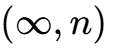
- Higher Category Theory and Homotopy Type Theory (MSC 18N): Formulating foundational frameworks for -categories to formalize topological quantum field theories, derived algebraic geometry, and synthetic homotopy theory13.
- Geometric Evolution Equations (MSC 53E): Analyzing non-linear parabolic differential flows, such as Ricci flow and mean curvature flow, to understand singularity formation in differential geometry and general relativity13.


The Computational Revolution: AI and Quantum Paradigms in Mathematics
Mathematical methodology is undergoing a structural shift driven by advanced computational paradigms.
Artificial Intelligence and Automated Theorem Proving
Artificial intelligence has expanded from numerical calculation to symbolic reasoning, formal proof verification, and automated theorem discovery23.
- Formalization and Interactive Proof Assistants: Modern proof verification relies increasingly on interactive proof assistants such as Lean 4, Coq, and Isabelle. As foundational proofs expand to thousands of pages, human peer review faces practical verification limits15. Projects such as Ulam AI deploy large language models to parse complex TeX source files, extract structural claims, normalize mathematical notation across multi-paper series, construct dependency Directed Acyclic Graphs (DAGs), and generate machine-checkable code stubs for formal proof libraries15.
- Automated Reasoning Performance: Specialized AI architectures have achieved significant milestones in advanced problem-solving benchmarks23. Systems combining auto-formalization with reinforcement-learning proof searches (such as Google DeepMind's AlphaProof and AlphaGeometry 2) achieved silver-medal performance at the International Mathematical Olympiad (IMO)23. Subsequent domain-tuned reasoning models (such as Gemini Deep Think) solved five out of six competition problems at the IMO, earning 35 out of 42 points to reach an official gold-medal benchmark23. Human competition graders verified the solutions as logically sound, precise, and complete23.
Quantum Computing and Algebraic Complexity
Quantum computing alters established boundaries of computational complexity:
- Transformation of Complexity Classes: Quantum systems exploit linear superposition, entanglement, and quantum interference to evaluate mathematical problems within the Bounded-Error Quantum Polynomial-Time () complexity class faster than classical algorithms.
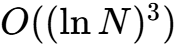
- Cryptographic and Number-Theoretic Impact: Shor's Algorithm reduces integer factorization and the discrete logarithm problem—the mathematical foundation of contemporary RSA and Elliptic Curve Cryptography—from sub-exponential classical complexity to polynomial time .
- Topological Quantum Field Theory (TQFT): Quantum hardware physically instantiates non-Abelian anyonic braidings, mapping directly to knot polynomials (such as the Jones polynomial) and higher category theory, bridging physical quantum hardware directly with abstract topology22.


The Evolving Imperative of Human Mathematical Literacy
A critical question facing contemporary society is whether the imperative for the average human to understand mathematics is increasing or decreasing in an era dominated by automated computation and artificial intelligence.
Analyzing this question requires distinguishing between procedural execution and conceptual literacy.
The Obsolescence of Procedural Computation
Historically, basic mathematical education focused on mastering manual algorithms: multi-digit long division, square-root algorithms, trigonometric table lookups, and manual algebraic manipulation. In the modern computational era, mechanical execution tasks are fully automated by electronic calculators, computer algebra systems (CAS), and automated AI code generators. Performing manual arithmetic calculation is no longer a primary cognitive requirement for functional participation in society.
The Escalating Imperative of Conceptual Literacy
Conversely, the need for human conceptual mathematical literacy is at an all-time high. As modern society becomes increasingly governed by automated data models, predictive algorithms, statistical risk metrics, and machine learning infrastructure, an uneducated population becomes vulnerable to quantitative misrepresentation and algorithmic disempowerment.
Essential areas where mathematical understanding is becoming more critical include:
- Statistical Reasoning and Misinformation Defense: Citizens are continuously exposed to epidemiological models, financial projections, climate statistics, and political polling data. Without an understanding of conditional probability (Bayes' Theorem), variance, correlation versus causation, and exponential growth dynamics, individuals are vulnerable to statistical manipulation and misleading data visualizations.
- Algorithmic Evaluation and AI Oversight: Machine learning systems operate probabilistically rather than deterministically. Understanding the operational boundaries of these tools—including sampling bias, data distribution drift, hallucinations, and over-fitting—requires conceptual mathematical literacy. Evaluating when an automated quantitative model's output is logically sound versus mathematically flawed requires human oversight grounded in structural logic.
- Financial and Economic Navigation: Modern consumer environments rely on mathematically complex financial instruments, including variable interest algorithms, automated credit scoring models, crypto-asset protocols, and personalized insurance risk algorithms. A lack of quantitative literacy directly correlates with increased vulnerability to predatory financial practices.
While manual calculation has become largely automated, high-level conceptual literacy—focused on problem formulation, quantitative critical thinking, probabilistic risk evaluation, and structural logic—is an essential requirement for agency in a technological world.
Conclusions
This analysis leads to several nuanced conclusions regarding mathematical representation, taxonomy, and future inquiry:
- Mathematics is Semiotically Mediated: While abstract mathematical invariants are universally valid, the symbolic representations used to express them—including positional bases (Babylonian sexagesimal, Mayan vigesimal, Hindu-Arabic decimal) and measurement systems—are culturally contingent cognitive tools1.
- Taxonomic Classification Continuously Adapts: The formal categorization of mathematical literature, systematically organized by MSC2020 across 63 main fields, dynamically expands to incorporate emerging computational techniques, data topology, and higher categorical structures9.
- Fundamental Research Continues to Expand: The proof of the unramified categorical Geometric Langlands Conjecture by Gaitsgory, Raskin, and their collaborators demonstrates that pure mathematics continues to resolve long-standing open problems while generating new frontiers in -adic analysis and mathematical physics15.
- Computation Reshapes Discovery: Artificial intelligence and quantum computing are transitioning from passive calculation tools into active partners in mathematical reasoning, capable of formalizing proofs, solving elite competition problems, and transforming computational complexity classes15.
- Human Literacy Must Focus on Concepts: Educational priorities must continue shifting away from procedural arithmetic execution toward conceptual, probabilistic, and algorithmic literacy, ensuring that human decision-makers retain the structural understanding required to direct automated systems.
Works cited
- Ethnomathematics - Curious, https://curious.science.org.au/space-time/ethnomathematics
- Maya numerals - Wikipedia, https://en.wikipedia.org/wiki/Maya_numerals
- Mayan Vigesimal Numeral System Explained | PDF - Scribd, https://www.scribd.com/document/931347737/Edited-Module-2-in-History-of-Mathematics-Lesson-4
- Babylonian Numerals Calculator and Converter - CountingMethods, https://countingmethods.com/babylonian-numerals-converter/
- A Hybrid Deep Learning Framework for Multi-Symbol Recognition, https://www.mdpi.com/1999-4893/19/4/322
- Babylonian numerals - OeisWiki, https://oeis.org/wiki/Babylonian_numerals
- Mayan Numbers Converter - Online Maya Numerals ... - dCode, https://www.dcode.fr/mayan-numbers
- The Mayan Numeral System | Mathematics for the Liberal Arts, https://courses.lumenlearning.com/mathforliberalartscorequisite/chapter/the-mayan-numeral-system/
- Msc2020-Mathematical Sciences Classification System - Scribd, https://www.scribd.com/document/482719391/msc2020
- Mathematics Subject Classification - Wikipedia, https://en.wikipedia.org/wiki/Mathematics_Subject_Classification
- (PDF) MSC2020-Mathematics Subject Classification System, https://www.researchgate.net/publication/358280512_MSC2020-Mathematics_Subject_Classification_System
- Using General Large Language Models to Classify Mathematical, https://arxiv.org/html/2406.10274v1
- Mathematics Subject Classification 2020 (MSC2020), https://msc2020.org/
- MSC Classification Codes - CRAN, https://cran.r-project.org/web/classifications/MSC.html
- AI and the Langlands Program: From Verification to Discovery, https://www.ulam.ai/langlands-ai
- Geometric Langlands correspondence - Wikipedia, https://en.wikipedia.org/wiki/Geometric_Langlands_correspondence
- Monumental Proof Settles Geometric Langlands Conjecture, https://www.quantamagazine.org/monumental-proof-settles-geometric-langlands-conjecture-20240719/
- [2405.03599] Proof of the geometric Langlands conjecture I - arXiv, https://arxiv.org/abs/2405.03599
- Proof of the geometric Langlands conjecture, https://people.mpim-bonn.mpg.de/gaitsgde/GLC/
- On the Proof of the Geometric Langlands Correspondance - IHES, https://www.ihes.fr/en/gaitsgory-glc/
- [2409.09856] Proof of the geometric Langlands conjecture V, https://arxiv.org/abs/2409.09856
- Implications and consequences of the recent proof of the geometric, https://mathoverflow.net/questions/481662/implications-and-consequences-of-the-recent-proof-of-the-geometric-langlands-con
- Advanced version of Gemini with Deep Think officially achieves gold, https://deepmind.google/blog/advanced-version-of-gemini-with-deep-think-officially-achieves-gold-medal-standard-at-the-international-mathematical-olympiad/